
Beyond Missiles: Trump’s Search for a Coalition for the Next Crisis
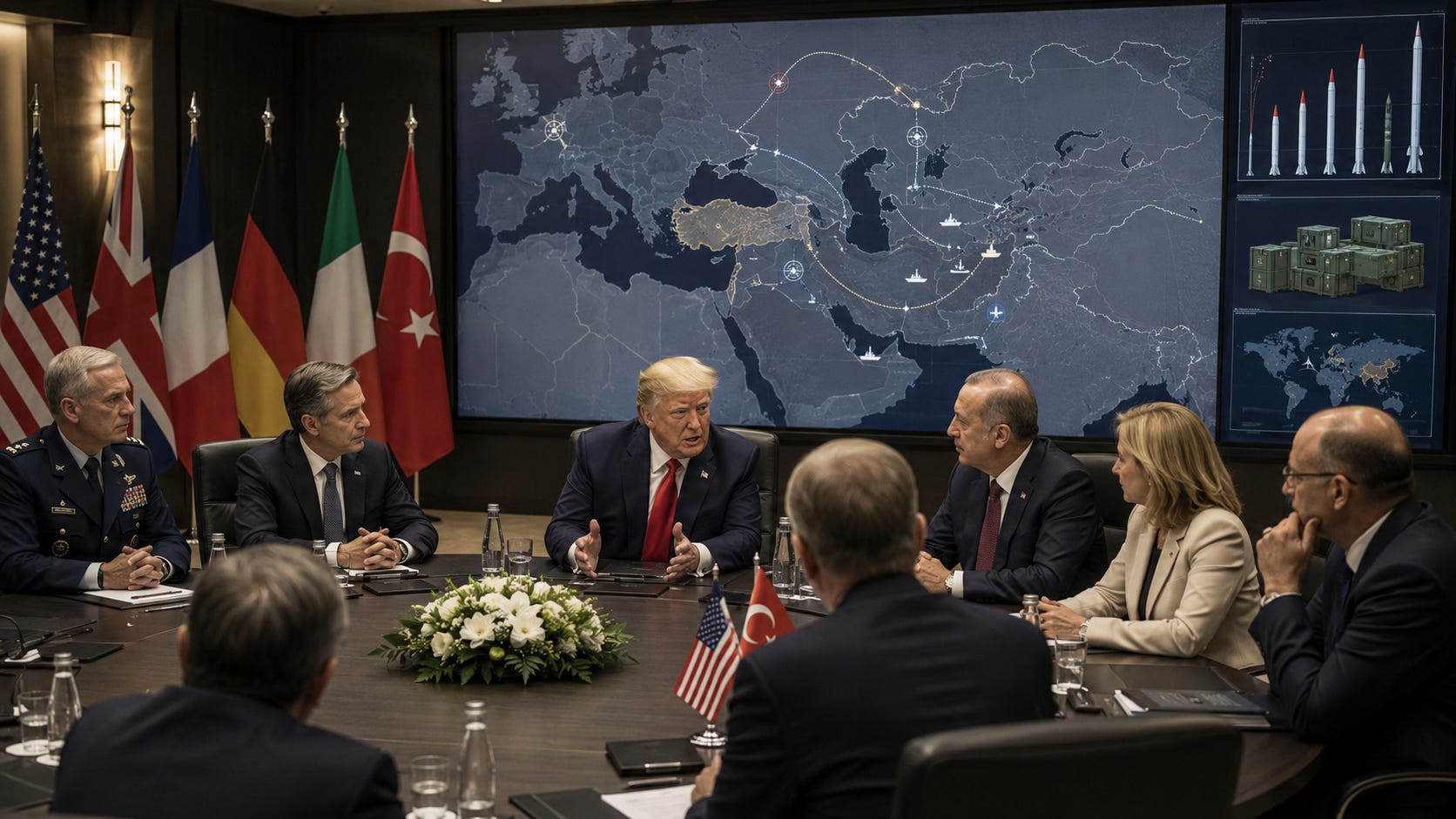
Preparing for the next conflict is not only a matter of replenishing missile stockpiles and replacing expended Patriot and THAAD interceptors. More important is building a coalition willing to participate actively in the next crisis, bear the costs, and accept political responsibility for the war.
The forty-day war showed that the United States had access to allied facilities and support but lacked a coalition willing to take ownership of the war. European countries made bases, overflight access, and logistical support available to the U.S. military. Yet many refused to take a direct and active role in the conflict or assume political and military responsibility for it. NATO itself emphasized that it had not participated in the operation as an organization. Trump’s problem, therefore, was not a complete absence of support but the limited nature of that support. Allies provided bases but did not send forces. They authorized overflights but were unwilling to share the costs, risks, and responsibility for continuing the war.
This gap was largely a consequence of how the war began. The Trump administration entered the conflict without first building a consensus and then asked countries that had played no role in its planning or decision-making to help manage its consequences. Some European governments explicitly stated that they were unwilling to accept responsibility for a conflict they had not helped initiate. The situation also reflected Trump’s initial calculation: he had expected a short, decisive war but instead faced a prolonged and costly conflict. As the war continued, Washington’s need for its allies became increasingly apparent. This was where the distinction between having access to “allied resources” and having an “allied coalition” became clear. Trump’s repeated criticism of NATO members also indicated that Washington regarded the existing level of cooperation as insufficient.
Turkey represented a more complex version of the same problem. The war with Iran showed that Turkey is not merely an ally whose facilities the United States can use; it can also complicate or block certain U.S. and Israeli options. According to credible reports, the initial plan developed by Trump and Netanyahu envisaged Kurdish armed groups based in the Kurdistan Region of Iraq entering Iran during the first days of the war and seizing parts of the border regions. Trump’s own acknowledgment, corroborated by subsequent reports, indicated that these groups had been armed and prepared for that purpose.
Turkey, however, regarded the activities of the Kurdistan Free Life Party (PJAK) and other Kurdish armed groups as a threat to regional security and stability. It opposed the opening of a Kurdish front and blocked the plan’s implementation. This did not mean that Ankara was supporting Tehran. Turkey’s primary concerns were its own security, preventing groups linked to the Kurdistan Workers’ Party (PKK) from gaining strength, and containing the spread of separatism across the region. But Turkey’s motives did not alter the outcome: one important avenue for exerting pressure on Iran encountered serious opposition from a NATO member. Turkey’s importance to Washington is not limited to the bases, airspace, and other facilities it can provide. Ankara can also make certain U.S. military and regional options more costly or impractical.
The recent NATO summit in Ankara should be assessed within this framework. Trump opened the meeting by criticizing allies that, in his view, had not cooperated sufficiently during the war. By the end, however, he was emphasizing NATO unity and seeking to secure Turkey’s support. The summit’s final communiqué also turned two of Washington’s key demands into shared positions among NATO members: preventing Iran from acquiring a nuclear weapon and ensuring freedom of navigation in the Strait of Hormuz.
This development does not yet amount to the formation of a new wartime coalition. NATO made no commitment to participate militarily against Iran, and Turkey showed no sign of abandoning its own security considerations. For the moment, Trump’s achievement in Ankara was political: reducing public disagreements, establishing a minimum degree of common ground, and preparing the ground for greater cooperation in the future.
The summit may simply have been an effort to repair NATO’s internal divisions rather than to prepare for the next crisis. But these two interpretations are not necessarily contradictory. Repairing those divisions could expand U.S. freedom of action in the next crisis, whether Washington’s objective is to strengthen its negotiating position or to prepare for a return to full-scale war. The effort is limited in scope but strategic in purpose: it seeks to narrow the gap between U.S. decisions and allied readiness.
The lesson of the war for Washington was clear: preparation for the next conflict does not take place in arsenals alone. Replenishing missile stockpiles and procuring Patriot and THAAD interceptors are necessary but insufficient. The Ankara summit was an attempt to restore the missing component of U.S. preparedness: building a coalition that Washington would not have to begin assembling only after the war had already started.
Thanks for reading! Subscribe for free to receive new posts and support my work.