
The Post-Election Risk: Washington, Israel, and the Next Phase of the War
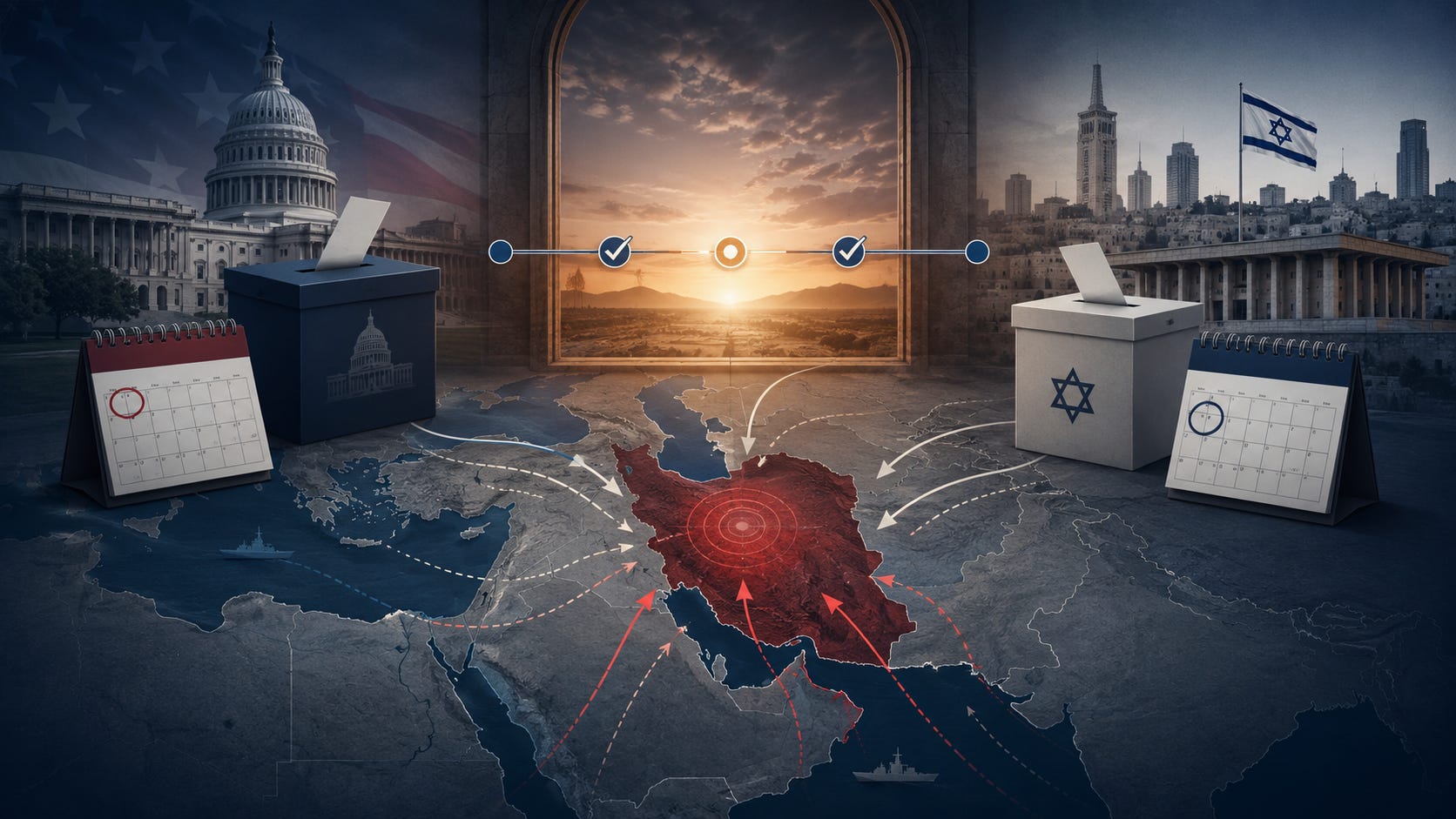
The coming autumn will not mean the same thing for Washington and Tel Aviv. Before the U.S. midterm elections, Trump has a stronger incentive to keep energy prices under control and prevent the war from widening. Netanyahu, however, may need to demonstrate strength and intensify tensions precisely because of Israel’s election. The principal window of danger will open after the elections, when U.S. electoral constraints fall away and the likelihood that Washington and Tel Aviv will once again align to intensify pressure on Iran increases.
Israelis will go to the polls on October 27, 2026, and the U.S. midterm elections will be held on November 3, 2026. Taking place one week apart, these two elections could alter the political incentives and constraints facing the principal actors in the war.
Washington: An Electoral Brake with an Expiry Date
For Trump, the war is not solely a security issue. Its continuation is directly linked to gasoline prices, the cost of living, and the outcome of the elections. The White House therefore has a stronger incentive before the elections to prevent the war from widening beyond control. Trump may issue threats, apply pressure, or even resort to a limited military operation. But a war that raises energy prices and creates the impression of a crisis spiralling out of control would carry significant political risks for him.
This electoral brake disappears after November 3. Even if the Democrats win the midterms, their victory will not immediately alter the balance of power in Washington. The new Congress will take office on January 3, 2027. There will therefore be a gap of nearly two months between the elections and the new Congress taking office—a period in which electoral pressure has ended, but any potential constraints imposed by Congress have not yet taken effect. During this interval, Trump will have greater freedom of action, with little immediate concern about voters’ reactions.
Even after the new Congress takes office, stopping the war will not be easy. Congress could pass a war powers resolution and demand an end to military operations, but Trump could veto it. Overriding the president’s veto would require two-thirds majorities in both chambers of Congress—an unlikely level of consensus even in the event of substantial Democratic gains. Congress’s more powerful lever, however, is the budget. Lawmakers could restrict or prohibit funding for new operations, but such measures would not take effect immediately, and the administration might continue for a time to rely on previously appropriated funds or its authority to transfer resources.
It is therefore too optimistic to assume that a Democratic victory would immediately constrain Trump’s freedom of action. The elections could shift the political climate against the war, but translating that shift into practical restrictions would take time. That delay could be sufficient for Washington to intensify pressure or carry out new strikes aimed at strengthening its negotiating position.
Israel: A Contest Between Hawks and Harder-Line Hawks
In Israel, the election is not a contest between war and peace. Most of the competition takes place among parties that regard Iran as a strategic threat and have no fundamental disagreement over the need to confront it.
Opinion polls indicate that the parties opposed to Netanyahu have collectively moved ahead of his current coalition. The key question, however, is how these opposition parties view the war. Gadi Eisenkot, one of Netanyahu’s most important rivals, accuses him not of warmongering but of yielding to U.S. pressure. His criticism is that Netanyahu has not been sufficiently decisive in Lebanon or in confronting Iran. Avigdor Lieberman likewise regards any agreement that leaves the Iranian government in power and provides it with new economic resources as a serious threat to Israel.
Netanyahu’s defeat would therefore bring to power a government that takes a tougher line toward Iran. If Netanyahu wins, he will probably become even more dependent on religious-right and ultranationalist parties to form a government—parties that now enjoy greater support. An increased share of the governing coalition would strengthen their ability to push the government toward more aggressive policies.
The central competition in Israel is therefore not over whether Iran should be confronted. It is over who can pursue that confrontation more forcefully, more effectively, and with greater U.S. support.
The risk of military action also exists before the elections. Netanyahu and Trump both need a demonstrable achievement. But the electoral cost of a wider war for Trump makes limited strikes more likely than a full-scale conflict. After the elections, this calculation will change: Trump’s electoral constraint will weaken, and the likelihood that the United States and Israel will once again align to intensify pressure on Iran will increase.
Thanks for reading! Subscribe for free to receive new posts and support my work.