
The Unfinished War: Why the Islamabad Ceasefire Collapsed
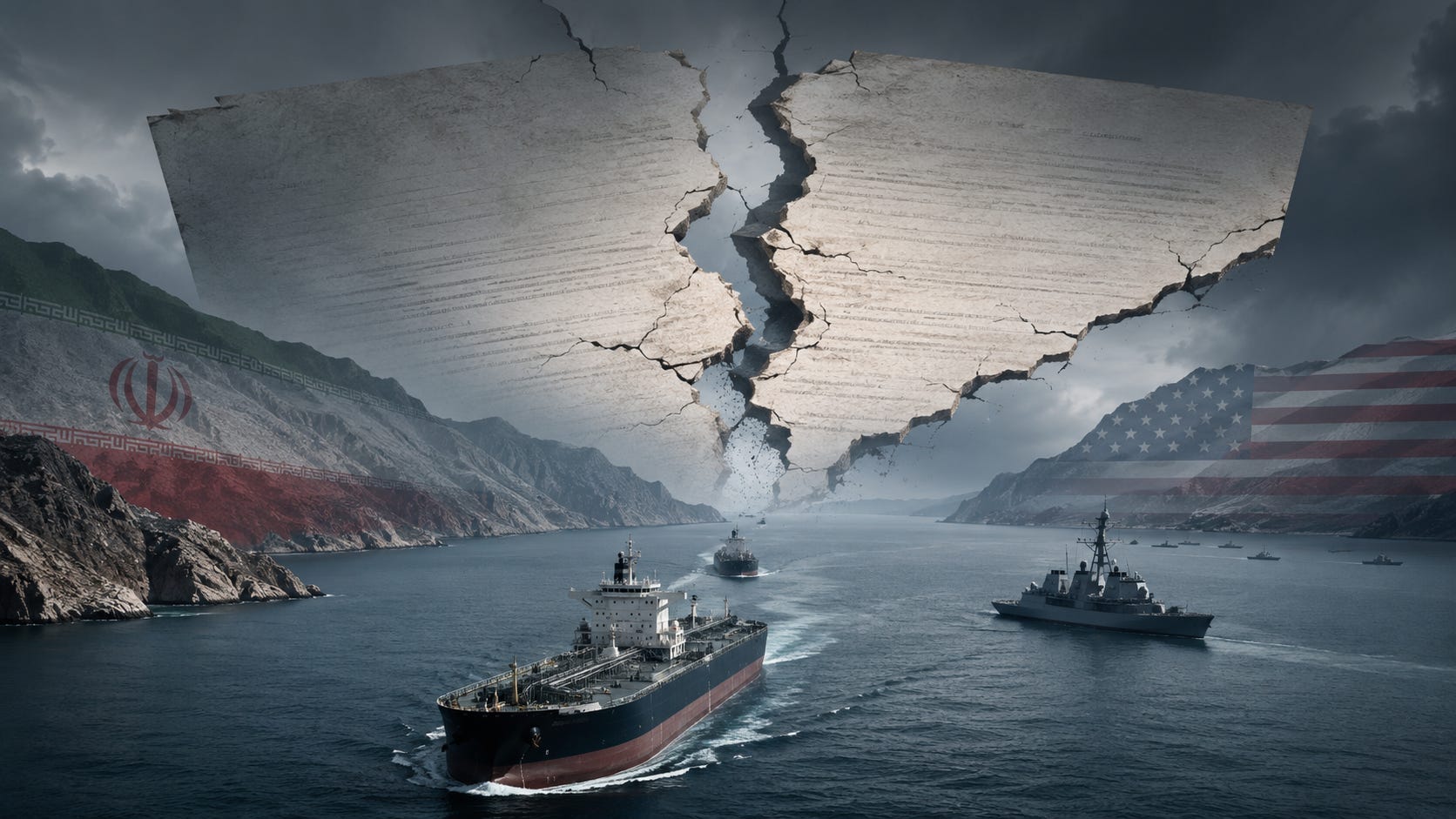
Less than a month after the Islamabad Memorandum of Understanding was signed, the United States reimposed its naval blockade of Iran. The explanation for this reversal should not be sought in the latest confrontations in the Strait of Hormuz or reduced to Iranian adventurism. The central question is what changed in the calculations of the two sides between the ceasefire and July 14—and what fundamentally remained unchanged.
A War Without a Decisive Outcome
The United States and Israel inflicted severe damage on Iran during the first phase of the war, but they did not resolve the central issues. Iran’s nuclear program remained in place, its leverage in the Strait of Hormuz was not eliminated, and Tehran’s regional position did not collapse.
Iran’s resistance and Washington’s failure to impose a strategic defeat led the United States to step back from the immediate pursuit of regime change. But this retreat did not extend to accepting Iran as a regional power or recognizing its role in the Middle Eastern order. The war forced Washington to scale back its maximalist objective without ending its opposition to Iran’s status as a regional power.
In “The Risk of a Renewed Attack”, I argued that declining munitions stockpiles might steer the United States away from a war of attrition but would not necessarily prevent another attack. Instead, they could push Washington toward shorter, more concentrated operations with more limited objectives. At the same time, in “Gabbard’s Resignation”, I explained that the weakening of voices opposed to war within the U.S. administration was reducing the political barriers to renewed conflict.
The ceasefire was reached neither because Washington was satisfied with the outcome of the war nor because it had fully retreated. An immediate continuation of the fighting would have been costly, but the United States had still not achieved its principal objectives. What occurred was less an end to the war than a temporary suspension of it.
An MoU to Delay the Crisis, Not Resolve It
The Islamabad MoU established the ceasefire, suspended the naval blockade, and provided limited relief for Iranian oil exports and financial transactions. But it deferred the central issues to subsequent negotiations.
In “An Agreement Out of Reach” and “Negotiation Without Trust”, I explained that the problem was not merely a set of technical disagreements; it was structural. In an atmosphere of deep mutual distrust, each side feared making its principal concession only to see the other renege on its commitments after receiving it. A final agreement therefore remained out of reach, and the failure to resolve the dispute at the negotiating table increased the likelihood of its return to the battlefield.
Before the MoU was signed, I also argued in “The MoU We Know Will Die” that although the arrangement was inherently fragile, it was still rational for Iran to accept it. Tehran was able to use this limited opportunity to reduce economic pressure, sell oil, and strengthen its resilience and preparedness.
When Time Worked to Iran’s Economic Advantage
The structure of the MoU was asymmetric. A significant share of the immediate obligations—from lifting the naval blockade to granting oil and banking sanctions waivers—fell on the United States, while the strategic concessions Washington expected depended on a final agreement.
The MoU also offered benefits to the United States, but time did not work equally for the two sides in economic terms. Estimates by TankerTrackers indicate that Iran exported more than 80 million barrels of crude oil and petroleum products over 26 days. During the same period, the U.S. Strategic Petroleum Reserve declined from approximately 340 million barrels on June 15 to around 316 million barrels on July 10.
These two trends illustrated the asymmetry of the MoU. Each week, Iran gained additional revenue and greater scope for recovery, while Washington’s principal gains remained contingent on future negotiations. Those negotiations, moreover, were not to begin until the United States had fulfilled its own commitments.
In “Temporary Relief, Strategic Containment”, I explained that Washington might accept limited economic breathing space for Iran in order to contain a crisis. But allowing the continued strengthening of Tehran’s financial capacity and ability to withstand pressure was incompatible with long-term U.S. strategy. This factor alone did not cause the return to war, but it increased Washington’s incentive to alter the status quo.
Preparing for the Next Phase
During the same period, the United States kept the military option open. Rebuilding munitions stockpiles, redeploying equipment, and expanding support capabilities showed that Washington did not regard the conflict with Iran as a closed chapter.
At the same time, Washington sought to rebuild the political and allied groundwork for the next phase of the conflict. In “Beyond Missiles: Trump’s Search for a Coalition for the Next Crisis”, I explained that the United States was seeking to rebuild its relationships with key allies and prepare them to support it in the next crisis. These moves indicated that Washington regarded the collapse of the MoU and a return to war as a serious contingency.
The Southern Corridor: When the Unfinished War Resumed
The dispute in the Strait of Hormuz concerned the framework governing maritime passage. From Tehran’s perspective, the expansion of the Southern Corridor under U.S. protection created a parallel framework outside the arrangements established by the MoU. Iran’s response to the corridor transformed limited confrontations into a cycle of retaliatory attacks.
In an earlier article on the pattern of regional conflicts, I argued that such confrontations do not usually escalate suddenly from calm to full-scale war. A limited change in the prevailing rules, the other side’s response, and a subsequent military reaction each prepare the ground for the next stage. The same pattern recurred in the latest confrontations.
A War That Fell Silent for Only a Few Weeks
The argument of this article rests on the convergence of several developments: the unfulfilled objectives of the first phase of the war, unresolved disputes, the fragility of the MoU, Iran’s economic gains, the continued availability of the military option, and, finally, Washington’s attempt to establish an arrangement in the Strait of Hormuz outside the framework accepted by Tehran.
From this perspective, the confrontations of July cannot be explained as the result of a sudden decision. The Southern Corridor did not mark the beginning of an entirely new dispute. It was the moment when the United States reactivated the unfinished war.
Thanks for reading! Subscribe for free to receive new posts and support my work.